Cream Blush vs Powder Blush: Which One Is Right for You?

Blush is one of the easiest ways to add color, warmth, and dimension to your face. Whether you prefer a soft, natural flush or a more defined makeup look, the right blush can make your complexion look fresh and radiant. However, with so many formulas available, one common question remains: should you choose cream blush or powder blush?
Both types of blush can create beautiful results, but they differ in texture, application, finish, and how they perform on different skin types. Cream blush is often loved for its dewy, skin-like appearance, while powder blush is popular for its lightweight feel, buildable color, and soft finish.
In this guide, we will compare cream blush vs powder blush to help you find the best option for your skin type, makeup routine, and personal style.
1. What Is Cream Blush?
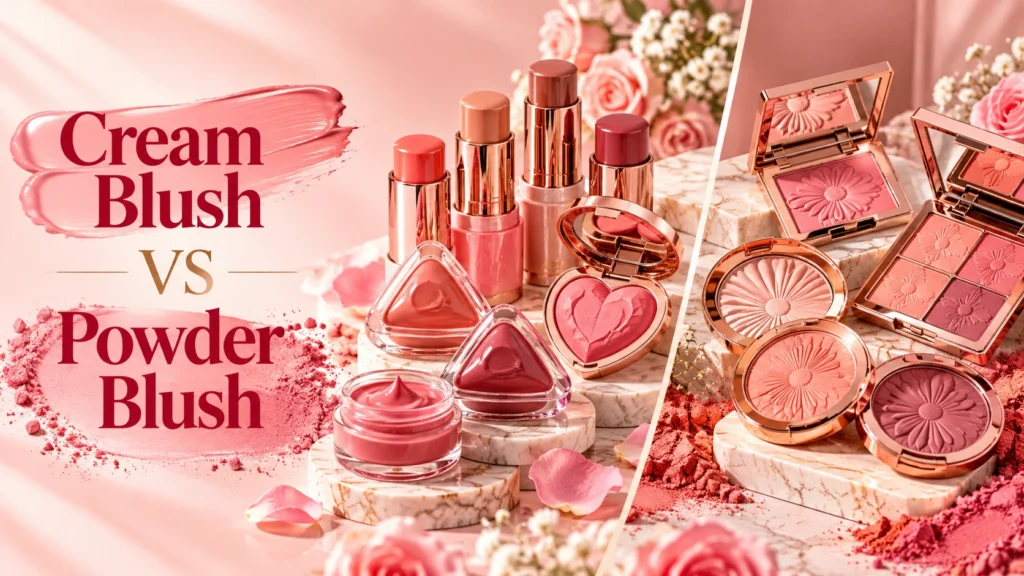
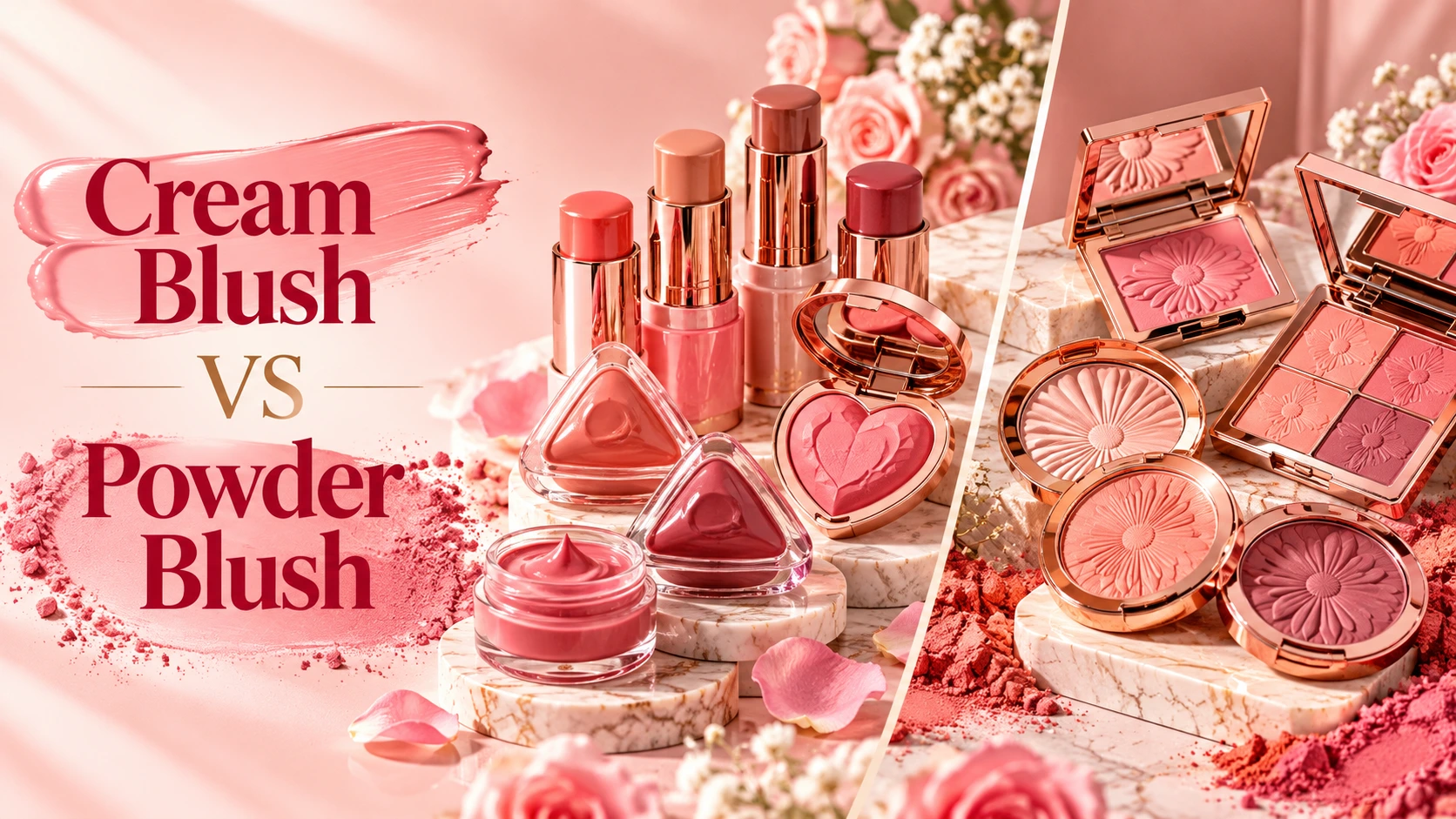
Cream blush is a makeup product with a creamy, balm-like, or sometimes mousse-like texture. It blends into the skin to create a natural-looking flush of color.
Cream blush is available in different formats, including pots, sticks, and compact creams. Depending on the formula, it can provide a dewy, satin, or soft-matte finish.
Benefits of Cream Blush
Natural-looking finish: Cream blush can blend seamlessly into the complexion, making it a popular choice for fresh, minimal makeup.
Buildable color: Many cream formulas allow you to start with a sheer layer and gradually add more pigment until you achieve your desired intensity.
Easy blending: Cream blush can often be blended with fingertips, a makeup sponge, or a brush, making it convenient for everyday application.
Radiant appearance: Dewy cream blushes can add a subtle glow, especially when paired with lightweight foundation or tinted moisturizer.
Who Should Choose Cream Blush?
Cream blush is a good option for people who prefer a natural, fresh-faced appearance. It can work particularly well for normal, dry, and mature skin, depending on the formula and skin preparation.
If your makeup routine focuses on glowing skin, minimal foundation, and soft color, cream blush may be the right addition to your collection.
However, people with oily skin can also wear cream blush. Choosing a long-wearing formula and setting it appropriately can help improve its performance.
2. What Is Powder Blush?
Powder blush is a pressed or loose powder product designed to add color to the cheeks. It typically comes in a compact and is applied using a blush brush.
Powder blush is available in matte, satin, and shimmer finishes. Its texture makes it easy to control the intensity of the color, from a subtle hint of pink to a more noticeable flush.
Benefits of Powder Blush
Soft, diffused color: Powder blush can create a smooth, blended appearance that complements both natural and full-coverage makeup.
Easy application: A fluffy brush helps distribute the product evenly across the cheeks, making powder blush straightforward to use.
Good oil control: Powder formulas can help reduce the appearance of excess shine, although the degree of oil control depends on the product.
Long-wearing options: Many powder blushes are designed to provide lasting color, particularly when applied over a suitable base.
Wide range of finishes: From velvety matte shades to luminous shimmer formulas, powder blush offers plenty of options for different makeup styles.
Who Should Choose Powder Blush?
Powder blush can be especially convenient for people with oily or combination skin who prefer a soft, less dewy finish. It is also an excellent choice for those who enjoy full-coverage foundation, setting powder, or more structured makeup.
If you want easy touch-ups, controlled pigmentation, and a classic powder finish, this formula may suit your routine.
People with dry skin can use powder blush too. Applying moisturizer beforehand and choosing a finely milled formula can help create a smoother result.
3. Cream Blush vs Powder Blush: Key Differences
Although both formulas add color to the cheeks, understanding their main differences can help you make a more informed choice.
| Feature | Cream Blush | Powder Blush |
|---|---|---|
| Texture | Creamy, balm-like, or mousse-like | Dry, pressed, or loose powder |
| Typical finish | Dewy, satin, or soft matte | Matte, satin, or shimmer |
| Best suited for | Fresh, skin-like makeup | Soft, defined, or full-coverage makeup |
| Application tools | Fingers, sponge, or brush | Blush brush |
| Buildability | Often easy to layer in thin amounts | Easy to build gradually with a brush |
| On oily skin | Depends on formula and setting | Often convenient for controlling shine |
| On dry skin | Can provide a fresh, radiant appearance | Works well with proper skin preparation |
| Touch-ups | May require careful blending | Usually convenient with a brush |
| Makeup compatibility | Works well with many liquid and cream products | Usually easiest over set or powdered base makeup |
Neither formula is universally better. Your preferred finish, skin preparation, and the products you wear underneath will influence the final result.
4. Which Blush Is Better for Your Skin Type?
Your skin type can help guide your decision, but it should not be the only factor. Different formulas behave differently, so consider how your skin feels throughout the day.
For Dry Skin
Cream blush is often a good starting point because its texture can create a fresh, radiant appearance without emphasizing dryness as much as some powder formulas might.
Prepare your skin with moisturizer and choose a cream formula that blends easily. If you prefer powder blush, use a hydrating base and apply the powder lightly.
For Oily Skin
Powder blush is often a practical choice because it can complement a mattified makeup base and help reduce the appearance of shine.
For longer wear, apply a thin layer over foundation that has been set appropriately. Cream blush can also work well if you select a suitable long-wearing formula and use a light dusting of setting powder when needed.
For Combination Skin
Combination skin may benefit from either formula. If your cheeks feel dry but your T-zone becomes oily, you can use cream blush on the cheeks and manage shine separately in oilier areas.
A lightweight cream or a finely milled powder can both work, depending on your preferred finish.
For Mature Skin
Cream blush can create a soft, fresh appearance when applied in thin layers. Satin-finish formulas may be particularly appealing if you want a little luminosity without noticeable shimmer.
Powder blush is also an option. Choose a finely milled formula and avoid applying too much product over areas where makeup tends to settle into fine lines.
5. How to Apply Cream Blush Correctly
Cream blush is relatively easy to apply once you understand how much product to use and how to blend it.
Follow these steps for a smooth, natural-looking finish:
- Prepare your skin: Apply moisturizer and sunscreen during your daytime routine. Allow your skincare to settle before applying makeup.
- Apply your base: Use your preferred foundation, skin tint, or concealer.
- Pick up a small amount: Use your fingertips, a sponge, or a brush to collect a little product.
- Place the blush: Apply it to the apples of your cheeks or slightly higher, depending on the look you want.
- Blend gently: Tap or stipple the product into the skin rather than rubbing it aggressively.
- Build the color: Add another thin layer if you want a more noticeable flush.
For a youthful, fresh look, blend the color softly across the cheeks. For a lifted appearance, concentrate the blush slightly higher and blend toward the temples.
Pro tip: When using cream blush over liquid foundation, gentle tapping helps reduce the risk of moving the base underneath.
6. How to Apply Powder Blush Correctly
Powder blush is ideal when you want controlled application and a softly blended finish.
Use the following technique:
- Prepare your base: Apply foundation and concealer as usual.
- Set where necessary: If your base is very creamy, lightly set the cheek area with translucent powder to create a smoother surface.
- Choose a suitable brush: A soft, fluffy blush brush helps distribute pigment more evenly.
- Pick up a small amount: Tap off excess product before applying it to your cheeks.
- Apply gradually: Sweep or lightly press the blush onto the desired area.
- Blend the edges: Use gentle circular or sweeping motions to soften any harsh lines.
Start with a small amount, particularly if the blush is highly pigmented. It is easier to add color than to remove excess product.
If you are applying powder blush over a liquid or cream base, make sure the base is not excessively wet or tacky. This can help prevent uneven patches.
7. Which Blush Is Better for Everyday Makeup?
For everyday makeup, the best blush is the one that fits your routine and gives you the finish you prefer.
Choose Cream Blush for a Fresh, Natural Look
Cream blush is an excellent option for minimal makeup, casual outings, and everyday routines built around glowing skin.
Pair a soft pink, peach, or rosy nude cream blush with tinted moisturizer, concealer, mascara, and lip gloss. The result is a simple look that adds color without appearing overly heavy.
Choose Powder Blush for a Polished, Soft-Focus Look
Powder blush works well for office makeup, events, and routines that include foundation and setting powder.
A muted rose, peach, or soft mauve shade can add definition while keeping your makeup balanced. A matte finish creates a more understated result, while a satin or shimmer finish adds luminosity.
Use Both for a Layered Finish
You do not have to choose only one formula. Applying cream blush first and layering a complementary powder blush on top can increase color intensity and may improve wear, depending on the products.
For best results, use thin layers and allow the cream blush to settle before applying powder. Avoid applying too much of either formula, as excessive layering can make the finish look heavy.
8. How to Choose the Right Blush Color for Your Skin Tone
Once you have chosen a formula, selecting a flattering shade is the next step. Your undertone and natural complexion can help you narrow down your options.
Fair Skin
Soft pink, light peach, and delicate rose shades can create a subtle flush. Start with a small amount of product to avoid overpowering your complexion.
Light to Medium Skin
Peach, warm pink, rose, and coral shades can complement a variety of makeup looks. Choose a sheer application for daytime or build the color for a more defined finish.
Medium to Tan Skin
Warm rose, coral, terracotta, and richer peach shades can provide beautiful definition. More pigmented formulas may help the color remain visible without excessive layering.
Deep Skin
Berry, plum, rich rose, brick, and vibrant coral shades can add striking color and dimension. Look for formulas with sufficient pigmentation to create your preferred effect.
Consider Your Undertone
- Cool undertones: Pink, cool rose, and berry shades may complement your complexion.
- Warm undertones: Peach, coral, terracotta, and warm rose shades are worth trying.
- Neutral undertones: You can experiment with both warm and cool shades, depending on your makeup style.
These are starting points rather than strict rules. The best blush color is one that you enjoy wearing and feel comfortable in.
9. Common Blush Mistakes to Avoid
Even a high-quality blush can look uneven if it is applied incorrectly. A few small adjustments can improve your results.
Applying too much product: Start with a light layer and gradually increase the intensity.
Choosing the wrong base combination: Cream blush over a very dry, textured base or powder blush over a wet, sticky base can create uneven application.
Ignoring blending: Blend the edges into your complexion so the blush looks like a natural part of your makeup.
Using the wrong placement: Experiment with placement to find what complements your face shape and desired appearance.
Selecting a shade based only on trends: Consider your natural lip color, undertone, and the rest of your makeup rather than choosing a product solely because it is popular.
Overlooking skin preparation: Proper moisturizing and a suitable makeup base can help both cream and powder blush perform better.